Showing posts with label Art Advocacy. Show all posts

OBSERVER 2022 Person of The Year: Shonna McDaniel's

"Art is Business" Sacramento Observer, reposted  by Alpha Bruton, Article by GENOA BARROW December 23, 2022


Shonna McDaniel's spent a lot of time lying down this year. The local artist slipped from a ladder while working on a community mural project and broke her foot.

As a person who is constantly on the go and doing something, usually for other people, being unable to move pained her as much as the injury itself; the initial injury turned into others, and she also developed life-threatening blood clots from being prone for an extended period.

McDaniels doesn't know how to sit still, yet it wasn't idle time when she was forced to. The artist's hands – and mind – were constantly working. Bedridden for five months, she discovered new ways to create and, while recuperating, organized art shows and youth art activities.

McDaniels' unapologetic work in showing the beauty of Black people and their contributions and her continued commitment to seeing Black artists have a seat at the table led to her selection by The OBSERVER as its 2022 Person of the Year.

Before her injury, McDaniels could be found running the Sojourner Truth African Heritage Museum in her beloved South Sacramento. She founded the museum in 1996 and has expanded it from a one-room space to a must-see cultural destination.
Local artist and museum founder Shonna McDaniel's has made a conscious effort to paint her people, educate the community and create opportunities for others to shine. Verbal Adam, OBSERVER
"We want to have information on great African kings and queens and individuals that they don't speak of when they talk about art history, that they are too afraid to speak of when they talk about our history," McDaniel says of the space.
Solo Exhibition Yolo Arts' Gallery 625, 2023

Visitors often encountered her going seemingly 100 mph, urging them to discover all the museum offers and pointing them to other activities throughout the building. She's still going full speed, only these days, it's in a wheelchair or a motorized scooter donated by a community supporter.

The museum is located inside the Florin Square complex. McDaniels' roots in the space date back 30 years to when she worked for Barbara Nord, the first Black woman to own a payee service in Sacramento. The building was known as the Business Incubator at the time. It's now home to several Black-owned small businesses and the African Market Place, which takes place every first and third Saturday. McDaniels also organizes Second Saturday activities to include Blacks in activities that expose people to art and culture as they do in other parts of the city.


"We need that for South Sacramento," she says. 

African Market Place leader Ra West hosted an art exhibit featuring McDaniel's during Second Saturday earlier this month. West says the spotlight was long overdue, as McDaniel's usually is uplifting other people's work.


Black Like Me
Where others see a blank canvas, McDaniels sees possibilities. When she sees voids, she seeks to fill them. When others push back against her desire to see people of color depicted in public spaces, she just paints them with bolder strokes.

She focuses much of her artistic energy on painting Black women in all their melanated glory. Former mentor Akinsanya Kambon says that's a skill in itself.

"You can't just make Black skin by using one color," says Kambon, who first taught McDaniels at the tender age of 4.

"Black skin has all the colors in it, and I see Shonna is doing that," he says. "You have to use reds and blues and greens, and purples, and yellows; all those colors come from the sun, and the sun reflects off the melanin in the skin.


"The first thing in being an artist is you've got to learn how to see. The average person doesn't know how to see those things, but when you study them, you learn how to see and paint them. But it's not easy. So when somebody does what Shonna's doing, you can see that they put in a lot of work studying those skin tones or skin colors."

McDaniels' work has been featured in the recurring "The Black Woman Is God" exhibit at the SOMA Arts Culture Center in San Francisco. Co-curator Karen Seneferu says that as an artist, McDaniels embodies what "The Black Woman Is God" is about.
The Black Woman is God: Reclaim, Reconfigure, Re-Remember 
Curated by Karen Seneferu and Melorra Green


"Shonna McDaniels is an unsung heroine," says a fellow artist. "Like the exhibit, Shonna's art celebrates Black women as essential to building a more just society. Shonna McDaniels creates spaces that are sustainable for the community's future.

“When she produces art, she expands the intersectionality of race, age and gender, dismantling stereotypes of Black women.”

McDaniels has taught art classes and conducted numerous workshops and exhibits. She has also been involved in such collaborations as the Visual Arts Development Project, Zica Creative Arts and Literary Guild, Kuumba Collective, and the Sacramento African American Nonprofit Coalition. She also advocates for Black inclusion in public art projects such as Wide Open Walls.

"Shonna is pure light and love in action," says Sandy Holman, founder of the Davis nonprofit The Culture C.O.-O.P.

Holman met McDaniel's at the African Market Place and says her life is better for it.

"She is fearless, committed, and talented beyond measure, but I love her most for what she does for our community and her zeal to give back," Holman says.

'Woke' Walls 
"Woke" is a reasonably contemporary term, but McDaniel's says she always has been that way. She participated in her first Kwanzaa at age 5 and attended an African-centered Saturday school where she learned Swahili and was immersed in the culture.

She credits her mother, Ollie Armstrong McDaniel's, who helps run the museum, for laying the foundation early.

"We had African masks, paintings, and images of Black people throughout the house," McDaniels says. "She was a part of the Black Panther movement. We would go to Oakland to participate in the marches and other activities, so she stimulated our minds."

McDaniels' father, William McDaniels, spent time behind bars and was changed by the experience. He passed on that knowledge to his children.

"When he got into prison, he started to cultivate his Black mind, and he started sharing that information with us as young people," she says. "He started writing letters to me as a young child and sharing information about historical Black leaders. I'm getting letters with all these powerful history lessons in them."

Her mother joined the Nation of Islam and exposed her children to its ideology and self-sufficiency message. Both have influenced her art and community-focused activism.

"I definitely was inspired by the fact that the Nation had an entire block of businesses in Oak Park," McDaniels says. "It was like a Black Wall Street. I had never seen anything like it before."

Today's kids need similar exposure, she says.

"My mom involved us in everything that she could possibly imagine that would cultivate our Black minds, and a lot of the parents are not doing that. That's one of the biggest mistakes happening today for our youth. Of course, we know they're not getting that information in school."

While educators were being damned nationally for teaching the realities of American history, McDaniels was educating local youth about their place in it through a docent program at the museum that gives them money for their pockets as well. While school districts across the country added classical Black titles to their lists of banned books, McDaniels was introducing youth to Black authors on the walls of her museum and supporting the local business, Escape Velocity's Boys in The Hood Book Club, a literacy program.

For McDaniels, who hosts a Black memorabilia fest and the annual Festival of Black Women's Hair, Body, Mental/Financial Health, Beauty, and Art, it nearly broke her heart to hear a local teen say she "didn't know anything about being Black until the George Floyd incident." Also troubling, she says, are upper-middle-class parents and celebrities with far-reaching platforms, who shy away from their Blackness and denounce the importance of young people knowing about their culture and their past.

"What our community does not understand is that our children are out here acting foolish and running amok, and it is because they don't have a knowledge of self," she says. "If they had a knowledge of self and loved self, that would allow them to love others in their space. If they knew that they come from greatness, they wouldn't be out here calling each other the n-word and the b-word; they would be on a whole other level of consciousness."


'This Work Is A Part Of My Soul'
During the pandemic, McDaniels and the Sojourner Truth Museum have minded the gaps for the community, hosting senior activities, providing weekly meals, and hosting youth pop-up events and art lessons, complete with supplies. Some events were covered by city COVID-19 money, but McDaniels continued the activities even after the funds stopped this year.

"This work is a part of my soul," McDaniels says. "It's my life's work, and I want parents to get it. I want our children to get it; I want them to succeed. I want them to love each other. It doesn't matter if the funding is not there. Like Malcolm said, 'By any means necessary.' So, if I have to come out of my own pocket, which I still do in the past and sometimes today. I've always had that mindset. I'll go without to make sure that my community has."


"I've seen her develop as one of the most accomplished artists in Sacramento, in terms of African Americans," he says.
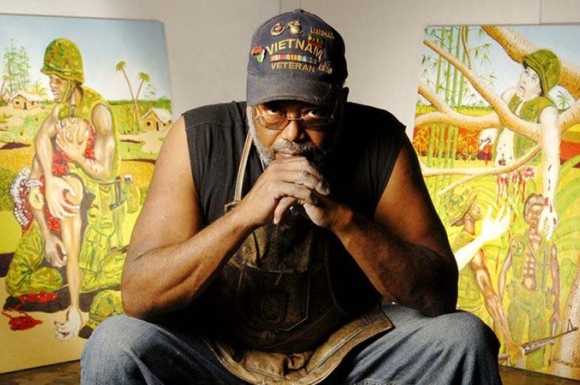
Born Mark Teemer, Akinsanya Kambon is an American artist and art professor.

Kambon is also happy she has stayed true to her activist roots.

"We as artists have a responsibility to speak to our people's struggle in this country because that's why our ancestors gave us this talent. They gave it to us so we can carry on the fight. We have to intensify the struggle," Kambon says.

Supporters often caution McDaniels that she's "doing too much," but those words aren't in her vocabulary. She's already focused on 2023 and getting an early start on securing funding for her annual Banana Festival, a significant museum fundraiser.

"A lot of people tell me, 'You're going to kill yourself trying to save your people,' 'You're going to make yourself sick,' or 'You have made yourself sick,'" she says. "It's just embedded in me to continue to do this work, and hopefully, before I transition, some major change will be made."

THE OBSERVER proudly salutes Shonna McDaniel's as its 2022 Person of the Year.

The Pop-Up Research Station CAFE THINK TANK 2023

Pop-Up Research Station -  Roots and Remedies Conference in Detroit, Michigan. 2013


Pop-Up Research Station invites your participation.

Phantom Gallery Chicago and Phantom Galleries LA have created a network of support for artists, curators, and arts organizers engaged in temporary public art installations, storefronts, and projects that engage community response. We envision the project as a portal for shared knowledge, a resource of best practices, ongoing professional development, and a place for moral support to enhance our collective impact. 
 
On August 7th, 2013, we launched a Podcast produced by GYST Radio on Blog talk.  GYST Podcast  http://www.blogtalkradio.com/gystradio. Pop-Up Research Station will develop gradually: hosting creative conversations that explore  “Temporary Public Art Installations,” " Storefront Art Movements,” “Creative Place-making,” and projects that are the impetus for “Cultural Urban Planning.”

 
Liza Simone of Phantom Galleries LA in Los Angeles is currently the host, but there will be guest hosts in cities nationally and internationally.  The Pop-Up Research Station will be a place to glean information. We see the Pop-Up Research Station as the portal to documenting our legacy, giving emerging curators and artists new to the world of creative place-making a “Tool Kit” that has already been 20 years in the making, researched, developed, and implemented by artists who have carved out niches and built new communities from empty storefront to monthly art walks. 

 Roots and Remedies Conference in Detroit, Michigan.

BlogTalkRadio covered snapshots of artist stories, hosted honest discussions on our problems, offered a support system, and solicited advice on how to avoid the potholes moving forward.  The interviews on BlogTalkRadio are conversational and geared toward the artist’s mindset but will be helpful for those interested in our projects as a research tool.

The Pop-Up Research Station began hosting a national conversation formatted as an online "THINK TANK CAFE"  in 2021. The recorded ZOOM podcasts will be a more candid conversation with guest artists, and artists professionals, with facts and figures.  Honest discussions on the problems we face as curators in temporary public spaces, the use of our intellectual property, and how it is used to cultivate urban renewal.
 Kiela Smith Upton, and Laura Weathered of Artists Design the Future/ NNWAC.
We are interested in your story. Please join in on the conversation.  Your feedback is vital. What are your needs in moving forward?  Perhaps you are developing ways to foster collaboration between organizations that we can explore together.   Can we create networks of organizations to jointly pursue funding?  Would an arts organizer's time bank be an excellent idea to follow?
Pop-Up Research Station Café

Join us every Tuesday at 11 am PST, 1pm CST, and 2pm EST

Casual networking & conversations exploring temporary public art, the storefront art movement, creative placemaking, cultural urban planning, and ways to create financial stability for working artists.  Zoom: Meeting ID: 813 6636 7712.  Passcode: popup

Café Menu:  Our weekly menu of topics is co-created by those who attend that week. To see what is happening next week and/ or to add your own topic visit our café menu.

Visit our Youtube Channel for some of our recorded meetings. As long as everyone agrees, we record some of our sessions.

The Pop Up, Research Station CAFE, is organized by: Alpha Bruton of Phantom Gallery Chicago Network, Liza Simone of Phantom Galleries LA & Space in the Gap, Kiela Smith Upton, and Laura Weathered of Artists Design the Future/ NNWAC.
 We will thrive when we find new ways of pooling our resources rather than duplicating them.  Together we can bolster our ability to achieve our goals as we mentor and support each other. 

If you would like to be interviewed, be on our mailing list, or offer suggestions, email  popupresearchstation@gmail.com.
  “Oakland Artists transforms historic corridor in Detroit’s North End.”

SOCIAL MEDIA 
Twitter.com/popupresearch  
Alpha M. Bruton
"Art is Business"
Artist | Art Consultant | Curator | Researcher
https://www.linkedin.com/in/alphabruton
http://alphabrutonartprojects.blogspot.com/
https://phantomgallery.blogspot.com
https://www.blogtalkradio.com/phantomgallerychicago
Thank you for your time and interest.
                                                        

Community Conversation and Quilt Installation

"Art is Business"    https://www.chicagotextileweek.com/week-of-events/community-conversation-and-quilt-installation.


Blue Circles is a community art project developed by Amanda Christine Harth for her residency SAIC at Homan Square.


I visited this Community Conversation and Quilt Installation, and so glad I did. 

On Friday, September 30th, 2022, I joined an open-ended community conversation about Chicago's textile art and craft communities and their interrelating histories. 

What is Chicago's textile history, and what can we do to remember that history while creating its present and imagining its future?

This conversation occurred in Nichols Tower, part of Chicago's textile history. Once part of the original Sears, Roebuck & Company, the building now hosts the School of the Art Institute's Homan location. Several community quilts will be displayed during the conversation as a reminder of Chicago's rich quilting history and to link this gathering to the tradition of quilting circles as a community gathering, planning, and healing site. Featured quilts include A quilt from recent denim dying and quilting workshop participants at SAIC Homan, a "circle work" quilt made by Teen Creative Agency, and quilts from a local church.

Gatherings like quilting circles, sewing clubs, embroidery protests, and knitting collectives inspired this community conversation! So, in the spirit of those gatherings, bring your projects (knitting, crochet, embroidery, card weaving, quilt squares, fashion sketching, hand stitching, lace work--whatever!) to work on during the conversation. Some basic materials will be on hand if you don't have a project to bring. Then, CTW representatives and makers of the quilts on display will give brief opening remarks to set the stage for the remainder of the program.


RESOURCE: Sickler Welcome Blanket Kits, 2000 Miles of Warm

Sickler Welcome Blanket Kits, 2000 Miles of Warm Welcomeblanket.org, Making change with Art & Activism-Craftivism. Partnering with refugee resettlement agencies & immigrant aid groups to distribute blanks. 

Donating quilts to those in need of a warm welcome. What better way to welcome than a pretty, fun, and useful blanket? The need is great. 

Where are the blankets going?
Your blankets are helping three organizations:
THE IRC, our refugee resettlement partner, works with asylum seekers who have been released from detention.

Miry's List a movement dedicated to welcoming new arrival refugee families.
Catholic Charities USA, aiding in their Helping at the Boarder program.

Learn More:


"Community-Committee", of "Correctional Officers" and "Cultural Creatives"

"Art is Business" Press Release Shonna McDaniel's, Executive Director, sojomuseum@gmail.com,  [916-320-9573], William McDaniel's Board President NAYC & Andre Morris Foundation.

Awarded California Arts Council JUMP StArts


National Academic Youth Corps Inc. DBA Sojourner Truth African Heritage Museum Awarded California Arts Council JUMP StArts Grant State funds support. With support from the California Arts Council, the National Academic Youth Corps, DBA, the Sojourner Truth African Heritage Museum, and Andre Morris Foundation, collectively as a "Community-Committee, of Correctional officers and Cultural Creatives," will use the arts as a Catalyst for BIPOC youth to transitioning successfully through the justice system.

SACRAMENTO, CA – The California Arts Council has announced a grant award of $45,000 to National Academic Youth Corps Inc. DBA Sojourner Truth African Heritage Museum as part of its JUMP StArts program in its first round of funding for 2022.

Our parent organization, National Academic Youth Corps Inc, has been actively involved with youth and young adults in the South Sacramento area since 1996 when it developed numerous creative arts programs and programs on literacy. Its purpose was to enable youth from culturally diverse backgrounds to stretch their minds and imaginations and provide a safe environment that stimulates creativity, promotes healthy lifestyles, and develops social skills.

Our joint goals are addressing system-engaged/affected youth who have been racially profiled, arrested, or on probation; and serving court-appointed education. Our project design is to help them navigate and transition to court-appointed anger management education and how to appear in their case review.

National Academic Youth Corps Inc. DBA Sojourner Truth African Heritage Museum was featured as part of a larger announcement from the California Arts Council, with grant awards for its Cycle A programming totaling more than $31 million across more than 1,100 grants supporting nonprofit organizations and units of government throughout the state. The dollar amount is the most significant annual investment in the California Arts Council's 46-year history. 


"We are elated today to be able to say that, with this first round of funds, we are placing a historic amount of money into the very worthy hands of California's arts and cultural workforce—and with more yet to come," said California Arts Council Chair Lilia Gonzáles-Chávez. 

"We have long since understood the value of our artists in this state. We are incredibly grateful to our Governor and our Legislature for their support and share a like-minded vision for a California where all people flourish with access to and participation in the arts."

Organizations were awarded grants across seven different program areas within Cycle A. They focused on the CAC's efforts to address geographic equity, enable autonomy and sustainability for smaller organizations, and grow the strength of local arts agencies and their partnerships.

To view a complete listing of all California Arts Council grantees by county, visit this link. For a complete listing of grantees by the organization, go to this link.

# # #

National Academic Youth Corps DBA Sojourner Truth African Heritage Museum (SOJO) offers programs and services that educate youth, families, and the community about diversity, inclusion, and history by engaging them in hands-on art-making, cultural opportunities, and educational experiences. Our mission is to open minds and change lives by exploring and celebrating African American history, experiences, and culture through art, wellness education, and outreach.

The California Arts Council is a state agency with a mission of strengthening arts, culture, and creative expression as the tools to cultivate a better California for all. Through grants, initiatives, and services, it supports local arts infrastructure and programming statewide. The California Arts Council envisions a California where all people flourish with universal access to and participation in the arts.
Members of the California Arts Council include Lilia Gonzáles-Chávez, Chair; Consuelo Montoya, Vice Chair; Gerald Clarke, Vicki Estrada, Jodie Evans, Ellen Gavin, Alex Israel, Phil Mercado, and Roxanne Messina Captor. 

Learn more at www.arts.ca.gov.
The California Arts Council is committed to increasing the accessibility of its online content. For language and accessibility assistance, visit https://arts.ca.gov/about/about-us/language-communications-assistance.

Californians for the Arts (CFTA)

"Art is Business"
Californians for the Arts (CFTA), the statewide arts advocacy organization, and California Arts Advocates (CAA), the statewide creative industries lobbying organization, are pleased to announce that Governor Newsom has signed the 2021-22 budget to include historic investments in the arts, culture and live events industries. In addition, on July 12, Governor Newsom signed SB 129 Budget Bill Jr, which amends SB 128 and SB 151 budget trailer bill, which contains more specificity for the grants programs for arts, culture, and live events.

The California State Budget represents a bold and momentous investment in the arts, culture, and creative economy. The pandemic’s impact has galvanized and united a broad coalition of arts advocates led by California Arts Advocates, California Association of Museums, and the California Chapter of the National Independent Venue Association and backed by more than 500 organizations, businesses, and local government leaders --aligning nonprofit cultural institutions, for-profit small businesses, and the creative workforce for the first time to lobby for a significant investment of $1 billion for arts recovery and stimulus from the State. The budget investments of over $600 million for this sector are a testament to the strength of this coalition that will survive well beyond this pandemic.

“We thank our Legislative and Newsom Administration champions, the thousands of arts advocates who showed up in support of our bold budget requests and the coalition that formed to lead the charge for transformational investments in arts, culture, creativity and live events, “ says Julie Baker, Executive Director of CFTA/CAA. “While the arts suffered more than most industries during the pandemic, it is heartening to know our sector has been seen and recognized for our valuable contributions both to California’s economic recovery and to our overall emotional health and wellness. California has an opportunity to be the leading creative state. With this level of investment, we are on a path to an equitable and just recovery for all creative workers and businesses to thrive.” 

The budget includes:

  • $50 million to Go Biz for grants to small nonprofit performing arts orgs to help with workforce development. Grants up to $75,000 based on budget size to help with:
  1. Employee expenses, including payroll costs, health care benefits, paid sick, medical, or family leave, and insurance premiums.
  2. Contributions or payments to a centralized payroll service.
  3. Recruitment, training, development, and other human resources-related expenses.
  4. Other operating expenses or equipment for employees. 

  • $150 million to GoBiz and CAL OSBA (Office of Small Business Advocate) for live events venues and businesses, including nonprofits and minor league sports.

  • $128 million to California Arts Council, of which $40 million is for Creative Youth Development, $60 million for CA Creative Corps Pilot program, and remaining for local assistance programs and staffing.

  • $50 million to Natural Resources Agency for museum grants programs.

  • Eighty-one arts and culture earmark investments in local communities such as $4 million to Self Help Graphics and Art, $6.5 million to Destination Crenshaw, $8 million to Debbie Allen Dance Academy, $13,500,000 to the City of Sacramento for community reinvestment, and $3 million to San Diego Symphony totaling close to $238 million.

Popup Research Station Investigates: Phantom Gallery Chicago Placemaking Projects 2003 - 2020

"Art is Business" from the archives. 


East Garfield Park Market Place, "Examing the State of Our Environment," 2007 curators uncovered value in the horse and carriage stalls abandoned for years; at the Garfield Park Conservatory, curators repurposed as marketplace curators invited six artists to install projects. Not pictured is John Song of Mobile Studios.


PopUp at Austin Public Library, SAIC Carol Frances Lung featured project, 2007 documenting and archiving projects after completing their investigation. 

There's a lot of underutilized space in cities. Tactical urbanism can be used to uncover value and demonstrate how an underutilized space could be transformed to contribute to safety, community building, or economic goals.


1. Uncover the value
There's a lot of underutilized space in cities. Tactical urbanism can be used to uncover value and demonstrate how an underutilized space could be transformed to contribute to safety, community building, or economic goals. Artists can attend online summits and conferences and participate in art advocacy days.


2. Engage stakeholders from the beginning

Public outreach can help to generate new ideas, build community support, and improve local understanding of urban issues.


3. Document and Measure:
The importance of before and after photos and metrics. Photos are most compelling when the before and after shots match perfectly, so some advanced planning of location, angle, and time of day is critical. Capturing different angles—including several street-level photos from the height of an adult and the height of a child, in addition to aerial photos—can make this documentation even more compelling.


Photo OP with JP  before becoming Governor of the State of Illinois at Gallery Guichard, reception fundraiser, with his running mate Juliana. Supporting the arts and business in Bronzeville 
 

Photo Op with Rahm Emanuel,  Mayor of Chicago, Near North West Arts Council, Laura Weathered, and Alan Emerson Hicks, Building dedication 2014.

4. Attract Attention

Using colorful materials, art, and creative promotional materials will help draw attention to an interim transformation. In addition, coordinating a shift with a planned event or organizing new programming can help to activate the space and attract media attention.

Daphne Burgess moderating a discussion for the Sojourner Truth African Heritage Museum

Call for artists and curators to have a platform for conceptualizing their idea and have a place to install the conversation in an installation. 

5. Position projects to inspire programs or policies
Tactical urbanism can be used to pilot new approaches, which might transform policy or inspire new programs.


 6. Have a seat at the table and become a stakeholder in community processes; artists can become part of the Task Force and visualize creative placemaking in the community where they live and work. 

Meeting with City and State officials, we are constituents and have a voice. 


2003 Switching Station Artist Lofts in East Garfield Park, Mayor Daley, supported artists' housing and attended the dedication ceremony and ribbon cutting.


Reference:
https://globaldesigningcities.org/2018/04/18/from-pop-up-to-permanent-five-lessons-in-tactical-urbanism/

The Global Designing Cities Initiative is a program of NACTO, a New York-based 501c3 non-profit organization. Our mission is to inspire a shift toward safe, sustainable, and healthy cities by transforming streets worldwide. We are a team of designers, planners, and urban strategists committed to working in support of city practitioners to get projects on the ground. We focus on empowering local officials and communities to become changemakers, equipping them with the knowledge, tools, and tactics needed to improve urban mobility and fundamentally change the role of streets in our cities. Our work is informed by the strategies and international best practices captured in the Global Street Design Guide.


Call For Action OPPOSITION TO ALDERMAN KING’S ZONING ORDINANCE

"Art is Business"

FYI- hope you can respond to this Call For Action  -- the ordinance has been on the agenda since December 2020. I received an email at 1:26 AM on Friday, March 19th, and was able to send a form letter to the  Zoning committed but couldn't attend the public meeting at 10am because I was scheduled for my COVID-19 vaccination.  But thanks to all who send a strong and resounding message to the City of Chicago and I urge you to keep an active voice 


Many of you may have seen information about a proposed ordinance (O2020-6185) introduced by Ald. Sophia King (4th Ward) would negatively impact Chicago’s long tradition of honoring and celebrating culture in our neighborhoods. The proposed ordinance would prohibit cultural exhibits, such as house museums, independent cultural institutions, and libraries, in nearly all residential districts. The ordinance would rob neighborhoods and residents of the ability to connect with their community’s heritage and build on Chicago’s vibrant cultural legacy.

There is also a lot more going on in the zoning amendment scenario than has been reported or responded to thus far...it’s confusing and contradicting because there's more to it.
Join us in supporting local independent artist-run spaces and independent cultural institutions by submitting a letter opposing this proposed ordinance (O2020-6185) to the City Council Zoning Committee. Arts Alliance of Illinois shared a template letter that you can download here for your convenience. Letters are DUE BEFORE 9:00 am tomorrow (Friday, March 19). 

Sign and email the letter by tonight (Thursday) to: 
Alderman Sophia King (4th Ward): ward04@cityofchicago.org 
Raymond Valadez (Zoning Committee): raymond.valadez@cityofchicago.org 
Alderman Tom Tunney (44th Ward & Chair of the Zoning Committee): Ward44@cityofchicago.org

This proposed ordinance is on the agenda for a Zoning Committee meeting on Tuesday, March 23rd, at 10:00 am.

House Museums Deserve a Community Process

It is important for us to protect both our cultural heritage and our community. They are not mutually exclusive.   The proposed ordinance was initiated in an effort to seek community engagement and support of museums as well as to provide assurances to the community that the museums will be an asset to the neighborhood. This process will also encourage the proposed museums to consider and engage the community, in its initial stages of planning so that there is an alignment of interests and support as we seek to preserve and protect the history and heritage in Chicago.  

Community members have raised numerous concerns regarding current proposals to convert existing homes into museums after learning that there are no procedural safeguards in place for current residents to weigh in, have their concerns addressed, and hopefully, to create an alliance between the proposed museum and the community.  

We are not trying to stop, inhibit, or deter cultural exhibits and museums, and we are certainly not trying to prevent important history from being acknowledged and celebrated.  We were met with many obstacles to landmark the “Ebony/Jet” building and to pay homage to Ida B. Wells (with the first street downtown named after an African American and Woman) so understand all too well the challenges to preserve our cultural treasures. 

We are, however, responsible for protecting the preservation of our history and our community. We understand and appreciate that certain homes have historical importance and need to be preserved, and that some should be an attraction.  But every home should not have this right and certainly the very community where it is being proposed should have input.  Even preserving a home via Landmark status comes with zoning consideration and a community process, which is all we are asking for here. 

Museums by their very nature are public attractions that may bring large numbers of people to them as well as affect traffic patterns and parking.  Currently, individuals can “as of right” turn their homes into museums, add stores to sell goods, and bring hundreds of people to the neighborhood, without adding parking and without any consideration for existing residents. Museums also have the absolute right to file for non-profit status and take their homes off the tax rolls, while potentially transferring some of the new costs and effect of changes to traffic and parking of the proposed museums to the community .  The ordinance we are proposing would bring transparency, community input and a process to a decision that impacts so many.

To put it in perspective, there are only 3 existing museums in the entire city that are in an RS1, RS2 or RS3 zone: Edgewater Historical Society, Norwood Park Historical Society and the Ridge Historical Society.  Each of them are on a main thoroughfare or arterial street, and on the edge of a residential neighborhood, not on a residential street. Edgewater’s president admits that "EHS was formed in 1988, after years of discussions among the community to form a historical society.” Why does he now want something different for our community? 

Our ordinance would change museums from “as of right” in Residential neighborhoods (RS1, RS2, and RS3 designation).  However, this doesn’t mean that one cannot have a museum in these areas. It just means that a proposed museum in those zoning jurisdictions would have to ask for zoning consideration and community input to do so. No current museum would be impacted by this ordinance.  And newly proposed museums in other zoning categories would have to add “a special use”. 

Notably, none of the individuals or organizations that are currently proposing museums live in the community that is being impacted.  We believe that something so significant, that might impact community residents’ quality of life and perhaps their single largest investment, should have a process for engagement and input. This ordinance proposes transparency, community input, and a process to make these impactful decisions.    
Best,

Sophia King


Alderman, 4th Ward
Thank you for the following-up. However, you need to be more focused on the violence in neighborhoods like carjackings, shootings, and other heinous acts occurring in and around neighborhoods. Leave artists run spaces alone! Art is equity and I have never heard of any occurrence or disruptive practices from these houses or spaces. In most neighborhoods, artist-run spaces and neighborhoods are a cohesive collective, because neighborhoods know that art and culture bring vibrancy are valuable to the community. 


The Black Metropolis National Heritage Area Commission (BMNHAC) has been working since 2004 to develop a Sustainable International African American Heritage Tourism.  Heritage Tourism Development is all about Multiple Sites and attractions and (guess what?) we have all finally moved from Feasibility to Development.  We are experiencing some expected growing pains, for some we’ve gone from incubation to acceleration very quickly but it's been decades of planning and it was possible because the infrastructure was already in place.  We enjoy a historical blueprint that is foundational to our efforts.

I’ve had the opportunity to work closely with Alderman King and the Michael Reese community Advisory Committee for 4 years.  She's working, strategic, and methodical, her track record and victories speak for themselves.  Similarly, the BMNHAC is focused on innovating a solution and has asked our community-based Think Tank the Urban Innovation Center to design another win-win-win solution. What is emerging is a much broader vision for our cultural economic development platform.  

The Thought Leaders feel that it is important to design a pivot because it does not serve our interests to counter a community empowerment theme. It's not an either-or situation. Most of the folks on this thread are both civic and social entrepreneurs. The Urban innovation Center has adopted the five principles and phases of cultural heritage tourism development.  Step One is Collaborate   Let’s acknowledge the business that we are in and understand what we are developing, an international destination. The African American Community and the Preservation community is experienced in mounting the fight, it’s time to plan the win!

Five Guiding Principles
  1. Collaboration – identify partners that can help meet the goals of the project
  2. Find What Fits – determine realistic types of cultural heritage tourism the community needs and can provide support for
  3. Enliven Site Interpretation – find ways to engage the visitors five senses (hearing, seeing, reading, and doing)
  4. Focus on what is authentic and unique about the community
  5. Preserve and Protect Cultural Sites & Resources (buildings, special places, landscapes, and qualities that attracts visitors)
  6. Cultural Heritage Tourism Development Phases or Steps

Identify Human and Financial Resources
Prepare for Visitors, Protect and Manage Cultural, Historic and Natural Resources
Public Relations, Advertising, Graphic Materials (including signs), and Promotions
Thanks
Paula Robinson
Bronzeville Partners LLC
Managing Member

Phantom Gallery CHI

Westside Conversations

"Art is Business" © 2026 Vanessa Stokes. All rights reserved. Community doesn't develop through presentations. It develops thr...