Showing posts with label Board of Advisors. Show all posts

Renewal Revival & Remembrance 2022 AAAM Conference

"Art is Business"  I'm attending the 2022 AAAM Conference representing Sojourner Truth African Heritage Museum; very excited about the opportunity to attend this year.


MISSION
The Association of African American Museums (AAAM) is a non-profit member organization established to support African and African American-focused museums nationally and internationally, as well as the professionals who protect, preserve and interpret African and African American art, history, and culture.

Established as the single representative and principal voice of the African American museum movement, the Association seeks to strengthen and advocate for the interests of institutions and individuals committed to preserving African-derived cultures.

The services provided by AAAM enhance the ability of those museums to serve the needs and interests of persons of African ancestry and those who wish to know more about the art, history, and culture of African-derived cultures.


HISTORY
AAAM was established to provide professional development and networking opportunities to broadly serve its membership base and African American and diaspora audiences. As a result, the Association has a longstanding success rate of convening leaders, from national and international institutions, around issues of professional development and capacity building, boasting a membership of over 800 individual and institutional members rallying around this worthy cause.

Membership comprises museums, museum professionals, institutions, and individuals who share an interest in African American art, culture, and history. Through training opportunities and member services, AAAM supports the goals of African American museums and museum professionals. The Association includes cultural organizations, historical societies, and museums that collect, preserve, and exhibit objects valuable to art, history, and science, as well as educational institutions, research agencies, and cultural centers.

AAAM works as an advocate for the interests of institutions and individuals committed to the support of African and African-derived cultures. It defines a relationship between the body of such institutions within the national museum community. It seeks to strengthen such institutions through improved communication, shared resources, training, annual conferences, technical assistance, and fundraising guidance. The Association also provides services supportive of the professional needs of its membership.


AAAM shares a common core of knowledge and a sense of purpose with our member institutions to advance the professional and scholarly attainments of our members by supporting opportunities for sound professional preparation, observing high ethical standards, and providing outlets for research and collaboration that foster the improvement of the museum profession.

AAAM FOUNDERS
In the late 1960s, Dr. Margaret Burroughs, founder of the DuSable Museum in Chicago, and Dr. Charles H. Wright, of the Museum of African American History in Detroit initiated a series of conferences for Black museums. In 1978, a consortium of six Black museums, with funding from the National Museum Act (administered by the Smithsonian Institution), presented a series of conferences at participating institutions. The conferences allowed an ad hoc committee to lay the groundwork for yet another organization.

Under the chairmanship of E. Barry Gaither, the committee, prepared by-laws ratified in Detroit in February of 1978. The new organization adopted the name" "African American Museums Association" (AAMA) and elected its first governing council AAMA's’sAAMA's's council AAMA's first office was at the Museum of the National Center for Afro-American Artists in Boston, Massachusetts.

During the General Session of the 1997 AAMA Annual Conference in Baltimore, Maryland, the members present voted to change the name t" "Association of African American Museum,"" dissolving the former name of AAMA. Reorganized as the Association of African American Museums (AAAM) in 1998, the organization continued servicing constituents with annual conferences and fellowship opportunities.

Under the leadership of a dedicated volunteer executive director, Willia" "Bi" l" Billingsley, AAAM relocated to the National Afro-American Museum and Cultural Center in Ohio and expanded its operations to serve the burgeoning number of new institutions focused on African American content. During this period, the organization set out to provide improved communication (including a website and newsletter), shared resources, professional training, and technical assistance.

In the 2000s and beyond, the Association has focused on identifying the composition and needs of its constituents and the larger African American museum community, aided by the support from the Institute for Museum and Library Services (IMLS). Including a number of projects surveying the Black Museum field and supporting strategic planning for the Association. Continuing its core work and collaborating with the new National Museum of African American History and Culture, AAAM looks forward to future success in furthering and implementing the critical work of institutions and professionals dedicated to preserving and promoting the art, history, and culture of African and African American communities globally.

Artists Design the Future Creatives Develop SPACES!

"Art is Business"


You are Invited!
I am hosting an Info Session with artists to discuss how artists + creatives might design, own, and manage art space. The Bloomingdale Arts Building is an example of condo ownership, and we will open a discussion about various models.

Laura Weathered


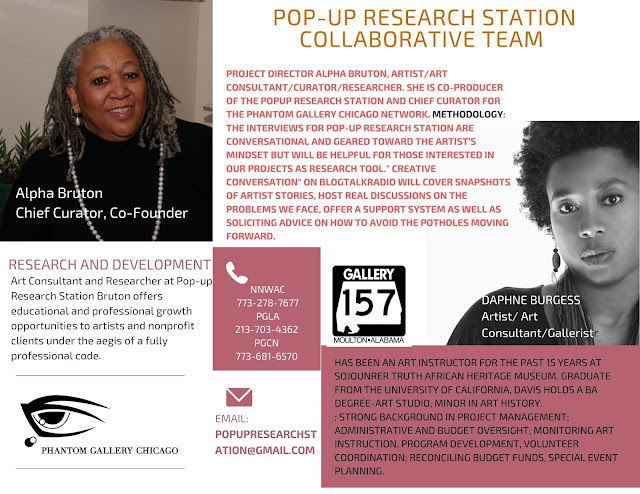
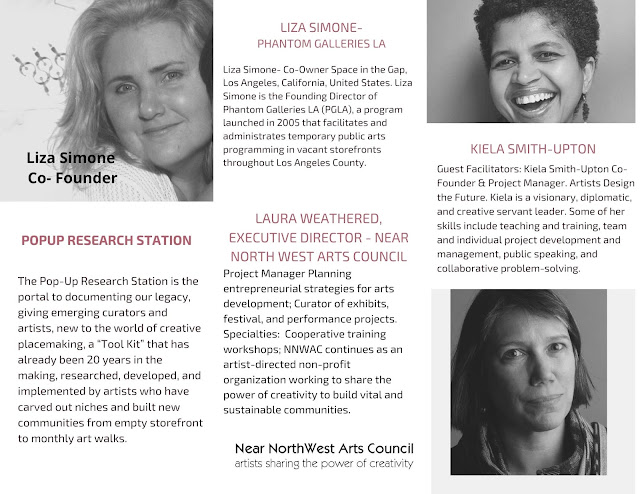
Pop Up Research Station Collaborative Team

"Art is Business"


Phantom Gallery Chicago Network, Space in the Gap, and the Near North West Arts Council/Artist Design the Future have created a support network for artists, curators, and arts organizers. That engaged in temporary public art installations in storefronts and projects that engage the community.

Popup Research Station- CAFÉ, a weekly professional development training 2 -hour session, will help build the capacity for that stewardship through training, infrastructure improvements, and external partnerships. Each session will be a working group, with breakrooms designed to have open conversations with collaborators on the team. We envision the project as a portal for shared knowledge, a resource of best practices, ongoing professional development, and a place for moral support to enhance our collective impact.


Background:
 In 2012 we launched a Podcast produced by GYST- BlogTalkRadio. Pop-Up Research Station develops gradually: hosting "Creative conversations" that explore "Temporary Public Art Installations," "Storefront Art Movements," "Creative Place-making," and projects that are the impetus for "Cultural Urban Planning." 

The Pop-Up Research Station is the portal to documenting our legacy, giving emerging curators and artists new to the world of creative placemaking a "Tool Kit" that has already been 20 years in the making, researched, developed, and implemented by artists who have carved out niches and built new communities from empty storefront to monthly art walks virtual trolley tours.

The interviews done for Pop-up Research Station are conversational and geared toward the artist's mindset but will be helpful for those interested in our projects as a research tool. Covering snapshots of artist stories, hosting honest discussions on the problems we face, offering a support system, and soliciting advice on how to avoid the potholes moving forward.

WORKPLAN FOR EACH CASE STUDY


To build institutional capacity, and increase access to archival collections, PopUp Research Station Collaborative Team: Phantom Galleries Los Angeles, Phantom Gallery Chicago Networks, Near North West Arts Council/ Around the Coyote, will carry out a yearlong series of administrative leadership training, hire a part-time digital archivist to develop its archive systems, and train volunteer citizen archivist from each organization.

Priorities for this component will be to catalog the current inventory of each collection;  document and register collections with Google files, preparing them for Internet Archive's Wayback Machine, Library of Congress, and the New York Art Resources Consortium. In addition, digital archivists will conduct monthly training provided by the collaborative team on digitizing its collections and designing them to enhance outreach, expand access, and improve collections management.

Representatives from all organizations collaborating on this project have had the option to participate in the project design process. They can contribute feedback and edits to the draft proposal, including budget documents. Representatives from all organizations collaborating on the project have been informed throughout the proposal design process. The final application materials have been shared with the primary contacts listed above.

Representatives from all organizations collaborating on this project understand that their organizations must sign the Intellectual Property (IP) agreement. Intellectual property (IP) refers to creations of the mind: inventions; literary and artistic works; and symbols, images, names, and logos used in commerce to solidify the research data shared between each collaborative partner.

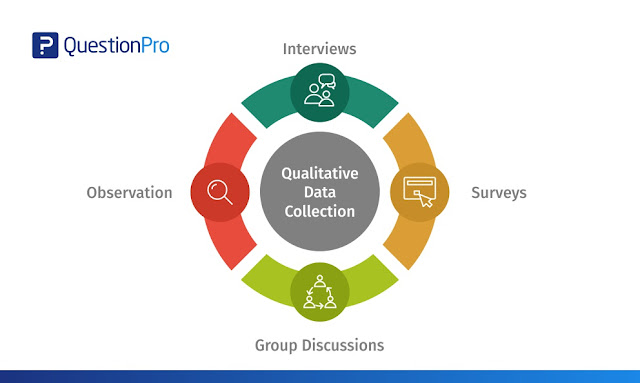
Several methods PopUp Research Station used to collect quantitative data, including Experimental. Controlled observations. Surveys: paper, kiosk, mobile, questionnaires. BlogTalk Radio -Telephone interviews. Face-to-face and Zoom Virtual Open Studio interviews. In addition, using self and peer assessment will be applied regularly throughout the project.


COLLECTIONS/CASE STUDIES:
Phantom Gallery Chicago Network, (Bronzeville Art District 2014 - 2021, GALLERY 157, Phantom Galleries Uptown Arts, Sojourner  Truth African Heritage Museum, Visual Arts Development Project)  Phantom Galleries  LA (Loiter Gallery,  Phantom Gallery Long Beach, Phantom Space in the Gap), and the Near North West Arts Council ( Around the Coyote, Artist Design the Future).


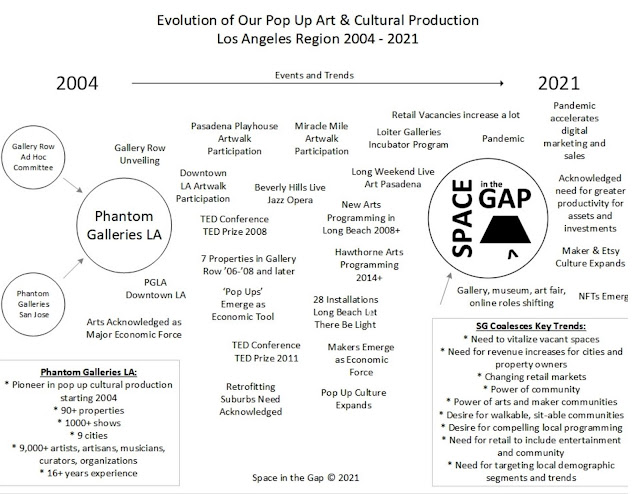
Sample mapping of Phantom Galleries Los Angeles

Pop-Up Research Station Weekly CAFÉ Zoom Meeting

"Art is Business" Join us every  Tuesday, 11am PST/1:00pm CST/2:00pm EST  
Join Zoom Meeting
Meeting ID: 813 6636 7712
Passcode: popup


Effective Grant Writing for Emerging Artists

"Art is Business" Reposted article written by Erin Sickler | Oct 5, 2021, | Finances


Grant writing can be intimidating for the inexperienced artist. Asking for money to support projects is stressful, especially when factoring in the reality that thousands of other creatives are competing for these same funds on their projects. Don't despair! Take a deep breath and settle in to take notes on our top tips on how to write effective, compelling grant applications.

WHEN GRANT WRITING, DO YOUR HOMEWORK
This may sound obvious, but many grant proposals are rejected because they fail to read and follow the grant requirements. Don't fall into this simple trap! Especially if you are submitting a complex application, comb over the details to help you to see if you are following all the instructions and not missing a deadline.

First, understanding the granting organization's mission is crucial. All granting organizations and foundations have a mission statement, usually posted on their website. Additionally, most organizations will have information about their scope of activities, plans, and projects. Comb through and align your language with the mission and guidelines appropriately. A quick tip: reviewing a list of past recipients is one of the best ways to determine whether your project is a good fit for their funding priorities before you put all the effort into writing a grant proposal. 

Common elements that make up an artist grant proposal include an artist statement, a project statement, a portfolio and/or work sample, and a budget. It's important to note that the budget is usually the most important factor of all of these. Your budget will indicate to the committee whether or not you have a realistic grasp picture of the project scope. For example, if the project requires unique materials or fabrication, receiving a quote on these aspects of the project in advance will help argue your case. While emerging artists can generally expect less funding than well-established artists, asking for too little can also be a red flag if the funds requested are insufficient to meet the project requirements.

Finally, make sure you save all materials submitted in the grant proposal. Keeping good records will also help remind you that writing effective grant proposals is a process. Over time, you can revisit older grant proposals and borrow relevant language, while also observing just how much your applications have improved.


Do your research on all the available grants with learngrantwriting.org!

As an emerging artist, you may be full of potential, but you have yet to prove it. At this stage, it is easy to underestimate yourself. Confidence is key to mastering the grant writing process, but at the same time, be sure to revise and ask for advice from more experienced grant writers where possible! Have a realistic yet positive view of your skillset. In his 1961 visitors pamphlet for The Watts Towers, Simon Rodia said, "You have to be good-good or bad-bad to be remembered." Rodia himself did not seek grants to begin his monumental public work: he just went out and did it. Approach your grant applications with grit and determination, and you're well on your way to mastering the skills needed to succeed at grant writing.

Not every opportunity will take you down the right path. Funding priorities shift and change, as do selection committees. Many artists will apply to the same organization year after year, so keep your head up and play the long game. Trust your intuition and stay true to yourself.

CONTINUALLY IMPROVE YOUR GRANT PROPOSALS
 Having a career as an artist requires many soft skills: personal attributes that enable you to interact and succeed professionally. For artists, these skills can vary widely. Curiosity and resilience are key soft skills for an artist. Remember that there is more than one path to reach a destination, and you do not need to compare yourself to others to capitalize on your strengths when "selling" your art project. Instead, work on communicating what unique aspects you incorporate into your art-making through your distinct voice. 

Writing mind-blowing grant proposals is a hard skill that takes time to master. If it is daunting to submit your first grant proposal, try to begin with a level-headed approach. Express your personality and your practice on the page as much as you can. Grant writing is a special form of writing, but it doesn't have to be especially academic. Grant committees are sympathetic to artists; above all, they want to understand where you are coming from and what you are trying to communicate with your work. This message can get lost if you are being too verbose or cryptic. William Zinsser's classic book of non-fiction writing, On Writing Well, can help you improve your writing skills if needed.

KNOW THYSELF WHEN GRANT WRITING
Know your practice well when writing a grant proposal. Focus and be attuned to what makes your artistic approach unique, and also to understand your relationship to the artistic traditions you are engaging with. Being unique is a paradox. While it is true we are all unique, we can get too absorbed with expressing our unique viewpoints. Follow the adage, "show don't tell." Telling someone you are unique is not the same as demonstrating it in your grant application. As an emerging artist, the bulk of your material comprising your grant writing should come from details about exploring your early experiences, such as life experiences that play a key factor in your art, identifying mentors or influences, and describing the technical processes involved in making your work. Try to make this information as specific as possible. Stay away from general concepts. Tell the story behind what it is that really is unique to you.

ASK QUESTIONS
The grant manager, or the person who organizes the application submission process on the organizational side, firmly understands how a grant represents an organization's mission. Some grants will specifically list a contact, but if not, you can find this person by contacting the organization. If parts of the grant application are unclear to you, do not hesitate to contact the grant manager. Make sure you prepare your questions ahead of time.

Most grant managers are happy to answer basic questions. At smaller organizations, they will often go a step further. If a grant manager is willing to spend some time with you then, it doesn't hurt to ask if you can run a proposal by them to learn more about if it matches current funding priorities. Taking this extra step can drastically improve the chances of your application.

If you receive notice that you did do not get the grant, don't hesitate to ask for feedback. Some organizations keep notes of the grant committee's comments and will provide them upon request. Otherwise, the grant manager may be able to give you some direction. If you do get the grant and have the opportunity to work with the organization, you should also still ask for feedback. You might inquire about what made your proposal stand out to the granting organization. 

Viewing the grant writing and submission process as an ongoing quest for information rather than a do-or-die situation will keep you stay calm and clearheaded, soft skills that in the long run, enhance your chance for success.

Have any tried and true methods worked for you when grant writing? Any notable tips for artists writing grant proposals for the first time?

Comment below!

Erin Sickler


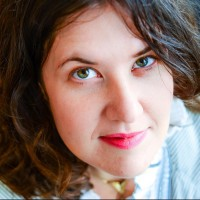
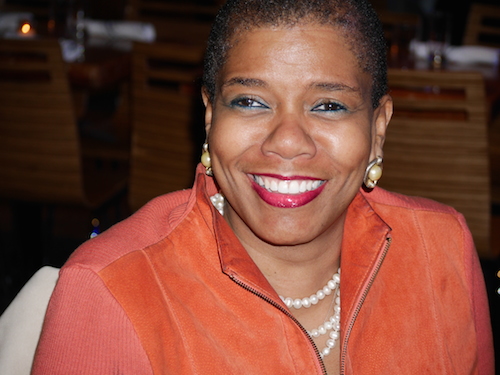
Suzetta Whitaker Phantom Gallery Chicago - Newest Advisory Board members

"Art is Business"


Suzetta Whitaker join the Phantom Gallery Chicago Network in 2020, as a new member of the advisory board she brings her experience in public relations, and venture capitalism. She was a Supervisor with the United States Census Bureau, which is responsible for conducting the population count of everyone in the United States. Therefore, she can be a significant part of ensuring communities, organizations, and individuals understand the importance and impact of being counted.  

I first met Suzetta as an Airbnb Host Ambassador in the Chicago Bronzeville community. As Host Ambassador, she ensures guests have a positive experience through the hospitality of sharing her home, the cultural and rich heritage of her community and city. We organized meetups for hosts that live in Bronzeville and neighboring neighborhoods on the South Side of Chicago. Participating in merchant walks, and enjoying let us entertain you with local restaurants in the Bronzeville neighborhood. 

Both professions are passions for Suzetta because they are instrumental in making a difference in communities and people's lives. 

Suzetta believes that meeting someone for the first time always leaves them with a positive memory. She has supported events here at the Phantom Gallery Chicago. 

We welcome her to our board and look forward to programming with her and her social circle in 2022.


Phantom Gallery CHI

2026 Remarkable Women Recognition Program | Nexstar Media Group

"Art is Business"  Nominate a Remarkable Woman Today! I. Program Overview The Remarkable Women Program celebrates extraordinary wo...