Showing posts with label Museum Practice. Show all posts

AAAM's Statement on the Retirement of Smithsonian Secretary Lonnie G. Bunch III

"Art is Business"  Dear AAAM Members, Vedet Coleman-Robinson, Ph.D., President & CEO
Association of African American Museums


There are people whose careers can be measured by the positions they have held, the institutions they have built, or the accolades they have received. Then there are rare individuals whose impact is measured by the people who can walk farther because of the path they cleared.
Secretary Lonnie G. Bunch III is one of those people.
On behalf of the Association of African American Museums, I extend our deepest gratitude and heartfelt congratulations to Secretary Bunch as he announces his retirement from the Smithsonian Institution after nearly four decades of extraordinary service.

For historians and public historians, Secretary Bunch has demonstrated what it means to place history in service to the public. He has spent his career reminding this nation that understanding America requires the courage to confront the fullness of the American story. That means telling not only the comfortable chapters, but also those that challenge us, complicate our understanding of the past, and ultimately help us better understand who we are.

For those of us within the African American museum field, however, Secretary Bunch's significance is deeply personal.

He is one of us.

His journey did not begin when he became Secretary of the Smithsonian or when the doors of the National Museum of African American History and Culture opened on the National Mall. His journey through this field stretches back decades, including his early work at the California African American Museum under the leadership of Aurelia Brooks.

Those beginnings matter.

They remind us that before the national titles and historic achievements, Secretary Bunch was doing the work that so many members of AAAM do every day. He researched, collected, interpreted, preserved, educated, and helped communities understand the importance of their own histories. He learned and practiced this profession within the very institutions that form the foundation of our field.

He has also been part of the AAAM family for much of his remarkable career. He has been our colleague, mentor, advocate, historian, museum professional, and friend.

That is part of what makes his story so powerful to us.

He allowed us to see ourselves.

When we watched him lead, we could see what was possible for our own careers. When we watched him build, we could imagine what was possible for our institutions. When we watched him take African American history to the National Mall and ultimately lead the Smithsonian Institution itself, generations of museum professionals could look at him and see that someone who came from our field, understood our institutions, valued our communities, and knew our struggles could reach the highest levels of the museum profession without forgetting where he came from.

Representation at that level matters.

By creating the National Museum of African American History and Culture, Secretary Bunch forever changed the landscape of museums in America. Perhaps equally important is what that accomplishment communicated to generations of historians and museum professionals: our histories belong at the center of the American story.

Secretary Bunch helped pave a road that so many of us now travel.

Because of his leadership, countless historians, curators, educators, preservationists, museum professionals, students, and emerging leaders have been able to imagine possibilities for themselves and their institutions that once seemed beyond reach. His example encouraged our field to dream bigger, insist upon excellence, and continue the difficult work of preserving and interpreting African American history.

His career has also demonstrated something fundamental about the work we do. African American history is not a specialized sidebar to the American experience. It is central to understanding America.

At a moment when the work of historians and museums is as consequential as ever, his legacy reminds us of our responsibility.
  • We must keep telling the full truth about America.
  • We must protect the historical record.
  • We must preserve the stories entrusted to us.
  • We must create space for the next generation.
Furthermore, we must ensure that future generations inherit institutions courageous enough to tell these stories fully and honestly.

Secretary Bunch has carried that responsibility with extraordinary grace, intellect, humility, courage, and determination. Now, those of us who have benefited from his leadership must continue carrying that work forward.

For AAAM, this is not simply the retirement of a Smithsonian Secretary. This is a moment to honor one of our own. It is an opportunity to honor someone who grew from this field, walked alongside this community, helped transform our profession, and then held the door open so that others could follow.

As we celebrate this remarkable chapter in Secretary Bunch's life and career, we invite the entire AAAM family to help us honor him. We welcome our members to share words of congratulations and encouragement, personal reflections, memories, and photographs through the AAAM member portal. Whether you worked alongside Secretary Bunch, learned from him, were mentored by him, shared a moment with him at an AAAM conference, or simply found inspiration in his journey, we invite you to add your voice.

AAAM will collect these messages and images and share them with Secretary Bunch as an expression of the gratitude, respect, love, and appreciation of the African American museum community. We want him to see and hear from the people whose careers, institutions, and lives his work has touched.

Secretary Bunch, thank you for allowing us to see ourselves in you. Thank you for showing generations of museum professionals what is possible. Thank you for making space for others. Thank you for believing in the power of museums, the importance of historians, and the transformative power of history.

Most importantly, thank you for helping America understand that African American history is not separate from American history. It is essential to understanding America itself.

You have paved the way.

We've got it from here. We will continue to fight the good fight!

With profound gratitude,

Vedet Coleman-Robinson, Ph.D.
President & CEO
Association of African American Museums

Obama Presidential Center is officially open to the public.

"Art is Business"  OPC
The Obama Presidential Center is more than a landmark—it's a new space of possibilities. Built on the South Side where the Obamas' journey began, this 19.3-acre campus was designed with you in mind. Find inspiration in a one-of-a-kind Museum, dive into a story at the public library, or hang with friends on the Great Lawn. From around the block to across the world, this is your home for hope and change. 


Learn about Mark Bradford's artistic practice, his commissioned artwork on campus, and his materially driven approach to abstraction. The discussion will be moderated by Louise Bernard, Founding Director of the Obama Presidential Center Museum.

Mark Bradford: Layers of America
Tue, July 7

Hear how Mark Bradford works with everyday materials and learn about his commissioned artwork at the Museum.


Mark Bradford is a contemporary artist known for large-scale abstract works made from layered paper and found materials. His work explores the social and political forces that shape history and experience. A MacArthur Fellow, he represented the U.S. at the 2017 Venice Biennale.

2026 Preservation Excellence Awards Chicago South Side landmarks

"Art is Business" 
https://www.chicago.gov/city/en/sites/preservation-month/home/2026-preservation-excellence-awards.html#Waters

2026 Preservation Excellence Awards: Chicago's top historic preservation projects, programs, and practitioners will be celebrated at DPD's third annual Chicago Preservation Expo on Monday, May 18, at the Chicago Cultural Center, 78 E. Washington St. Held in honor of Preservation Month, the awards showcase the best preservation work to advance through the Landmarks Commission's Permit Review Committee in the last year. The awards ceremony runs from 6–7 PM and will be emceed by WGN TV personality Ana Belaval. The awardees are listed below.

Muddy Waters House: 
Kenwood

Considered by many to be the "Father of Chicago Blues," Muddy Waters was one of the most important figures in the development of electrified blues music worldwide. His impressive list of awards and commercial successes includes sixteen R&B chart hits with Chicago's Chess Records from 1947 to 1975.  

Born McKinley Morganfield in 1913, Muddy's house on Lake Park Avenue was the only residence the musician ever owned in Chicago. It became an unofficial center of artistic activity for blues musicians. Band members, including Otis Spann, James Cotton, Little Walter, and Paul Oscher, stayed at the house, while lodging and food were also shared with traveling musicians such as Howlin' Wolf, Chuck Berry, and countless other artists.  

In 2021, the house was designated a Chicago landmark with the support of Muddy's great-granddaughter, Chandra Cooper, who owned the home and envisioned creating a museum inside. With assistance from a $250,000 Adopt-A-Landmark grant, as well as other financing and in-kind donations, Ms. Cooper focused on high-priority repairs to get the house ready for visitors. This included work on the historic masonry and new windows matching the original profiles. The bay on the front elevation was reclad to match its appearance when Muddy lived there, and extensive interior work was done, including an entirely new HVAC system. 

Future phases of the project will focus on museum programming, a jam space, an educational recording studio, and office space. When completed as the Muddy Waters Mojo Museum, the building will be a place for music, learning, and community events.  

The project team included Ed Torrez (Arda Design), Mike Mitchell (contractor), and the building's owner. Initial work was completed in 2026.

Roberts Temple Church of God in Christ, 4021 S. State St., Grand Boulevard
Grand Boulevard  (Bronzeville) 

The Roberts Temple Church of God in Christ building had an extensive history leading up to Emmett Till's funeral in September 1955. The church was built as a one-story structure by South Side architect Edward G. McClellan and later expanded in 1927 to include a large second-floor sanctuary. An additional full expansion was completed one year later, and a final remodel was completed in 1943.  

Roberts Temple is best known as the location of the funeral and visitation for Emmett Till after the 14-year-old was murdered by lynching in Mississippi. Mississippi authorities originally planned to bury Emmett locally. Still, his mother, Mamie Till Bradley, insisted that his body be brought home to Chicago for an open casket funeral and later, burial. Ms. Bradley requested that the funeral be held at Roberts Temple Church of God in Christ, with the Rev. Isaiah Roberts presiding. Emmett's death was widely covered by local and national press, and many Chicagoans were outraged by the murder of the young boy, wishing to pay their respects. At least 2,000 mourners assembled inside the church, and as many as 5,000 additional people gathered outside. The event was an important catalyst for individuals seeking social and political justice and equality for African Americans, and the building exemplifies the importance of Emmett Till's tragic death to the Civil Rights Movement in the United States. 

In the 1990s, the church's front façade was reclad in tan face brick. The church congregation wanted to honor its history and restore its exterior to how it looked at Emmett's funeral in 1955. Exterior work began in 2024, including masonry and window restoration of the front façade. The project team retained and recognized the distinct elements of the church's evolution across various periods, renewing its role as a place of worship and a center for education, reflection, and community engagement.  

The project team included Roberts Temple Church of God in Christ, Arda Design (architect), and Berglund Construction (contractor). The work received a grant from the National Trust for Historic Preservation's African American Cultural Heritage Action Fund to assist with project costs. 

Today, the building is a beacon of optimism that reflects its storied legacy and the history of greater Bronzeville.

BOSS MOVES: BLACK WOMEN IN BUSINESS

"Art is Business" https://www.bigdayofgiving.org/story/Wbjmkf


As we face a time when accessing information about diverse communities is becoming more difficult, and often removed from public view, organizations like the Sojourner Truth African Heritage Museum play a vital role. They provide access to art, artifacts, and literature, highlighting the importance of year-round education and resources that celebrate diversity. This underscores the necessity for ongoing opportunities to honor and learn about different cultures.

Please join us to ensure that celebrating Black history goes on beyond the month of February-help us make sure that it continues 365 days a year!!! We are asking business owners to sponsor 10 or more prints to gift to Black Women in their community. Our beautiful video link is below. 
 Thank you for your consideration. Shonna McDaniels 

--


Sacramento History Museum Offers Two Exciting Ways to Celebrate Black History

"Art is Business"  Month Traci Rockefeller Cusack 2 Min Read, 

Museum Location:
The Sacramento History Museum
101 I Street
Old Sacramento, CA 95814
(916) 808-7059

Curated by Shonna McDaniel's, Executive Director 
Sojourner Truth African Heritage Museum

The Sacramento History Museum is excited to offer two engaging ways the community can celebrate Black History Month: experiencing a limited-time exhibit of triumph and enjoying a lively evening of Sacramento jazz and blues blended with Black history.

A History of African American Educators Exhibit – Now through March 30

In proud partnership with Sojourner Truth African Heritage Museum, the Sacramento History Museum has a special exhibit titled “A History of African American Educators.”  The culturally rich exhibit features two 19th-century teachers who prevailed against racial discrimination by breaking down discriminatory barriers to equal education. The exhibit provides a unique opportunity for visitors to experience what it may have felt like sitting in an early 20th-century classroom, to discover the challenges of segregated schools, and to learn about the triumphs of educators such as Elizabeth Thorn Scott Flood and Sarah Mildred Jones who broke barriers to provide free public education to all ages and races. This limited-time exhibit is included with Museum admission.

A Sacramento Jazzstory: West End Blues – Thursday Evening, February 27, 6-8 p.m.

To close out Black History Month, the Sacramento History Museum is pleased to present an evening of entertainment from the Harley White Jr. Orchestra, “The West End Blues,” offering an incredible blend of history and music. Guests will enjoy a lively evening where big-band jazz fills the air, setting the stage for a journey into Sacramento’s West End. In addition to the powerful music, Sacramento historian William Burg will weave in captivating tales from the lost neighborhood, bringing the stories of its vibrant community to life. With a mix of live music, compelling narratives, and historical photos, the event will highlight the triumphs, struggles, and untold stories of sacraments that have faded from memory. Tickets cost $50 for adults and $35 for members.

Traci Rockefeller Cusack
Traci Rockefeller Cusack has 25+ years of media and public relations experience.  Her work experience includes News10 (ABC) as Promotion Manager from 1989-1998 (where she developed and launched “Coats for Kids’ Sake,” a winter coat drive that lasted 20+ years plus coordinated Oprah Winfrey’s first ever visit Sacramento) and Fleishman-Hillard as Vice President from 1998-2005 (where she led the wildly successful statewide “California Grown” program and also produced the five-minute video that played on the Jumbotron on Opening Day at Pac Bell Park). In 2007, she launched T-Rock Communications and currently handles a wide range of marketing activities for several top-notch organizations.

Exploring legacy: must-see Black History Month art and culture in Sacramento

"Art is Business"  SacObserver.com , by Solving Sacramento February 14, 2025
Sojourner Truth African Heritage Museum Founder Shonna McDaniels
 in front of a museum art display. The SOJO Museum in 
Sacramento is known for its extensive collection of historical Black art. (Photo by Diane Mitchell)

Founded by visual artist and community leader Shonna McDaniels, the Sojourner Truth African Heritage Museum is a cultural jewel housed in Sacramento’s Florin Square, a historic hub and marketplace designed around Pan-Africanism. 

Guided by the Ghanaian principle of “Sankofa” — meaning to “go back and fetch it” — the museum encourages visitors to delve into the past to better understand the present.

“We have to go back and fetch what was lost. Everyone needs to know about Africans' contributions to the world. Most people do not know the truth,” McDaniels said.

McDaniels’ journey to become an art activist began in childhood. “My parents believed having a strong sense of identity was essential. Our home was filled with Black art,” said McDaniels, who grew up in Sacramento. “I attended Shule Jumamosa [an African-centred school] in Oak Park in 1971, where we learned Swahili, celebrated Kwanzaa, and practiced African dance.”

A journey through history
A display depicts the Transatlantic Slave Trade on view at the 
Sojourner Truth African Heritage Museum. (Photo by Diane Mitchell)

Walking into the museum feels like stepping into a living timeline. It features installations that spark conversation. One standout is the “Golden Milk Project,” designed by McDaniels herself. This installation confronts the historical practice of enslaved African women being forced to breastfeed the children of their enslavers.

“There’s a strong connection formed when a mother breastfeeds her baby — recognizing the mother’s face, feeling nurtured and taking in all the benefits of the milk,” McDaniels said. “But these women’s own children were neglected, as they were denied the same nurturing from their mothers.”

Youth docent and Sacramento City College student Myana Myrica in the 
Sojourner Truth African Heritage Museum. (Photo by Diane Mitchell)

This installation is one of many exhibits at the museum that offers a powerful and unique portrayal of the Black experience — and youth docents are often onsite to provide their insights into the space.

Youth docent and Sacramento City College student Myana Myrica often begins her tours by encouraging visitors to breathe in preparation for the heavy emotions the museum may evoke. “Breathing and being in the space with each other allows us to feel connected and know we’re not alone,” she said. 

The museum’s visual journey begins in ancient Africa, with statues depicting ancestors, animals, and deities, symbolizing humanity’s origins. Some art installations also challenge current narratives of the transatlantic slave trade, such as Lee McCormick’s mixed-media piece portraying the harrowing journey of enslaved Africans, a haunting reminder that Africans in the Americas were stolen and did not immigrate here merely as workers.

Why it matters
Despite the cultural and historical significance of the SOJO Museum — the only of its kind in Sacramento that focuses on Black history and art — increased patronization could help its longevity, according to McDaniels.


Ancient African Art at the 
Sojourner Truth African Heritage Museum (Photo by Diane Mitchell)

“We need everyone involved to ensure the museum is being supported. Currently, we do not have it,” McDaniels said. “We’re the only museum of this nature training children as docents. Now, our efforts are being duplicated around the world.”

“As we enter a time when accessing information about diverse people or thoughts is being challenged, exposure to art and literature becomes even more critical,” artist Daphne Burgess, whose work “Snappin’ Beans” is displayed at the museum, said. “Spaces like the Sojourner Truth African Heritage Museum are essential, and Black History Month is the perfect time to support them.

Sojourner Truth African Heritage Museum is open to the public Thursday through Saturday from 12:00 p.m. to 5:00 p.m


Art beyond the museum
For those seeking even more artistic engagement this Black History Month, 
Sacramento offers two other significant events:

The “Golden Milk Project,” designed by Shonna McDaniels, is an installation at the Sojourner Truth African Heritage Museum that confronts the historical practice of enslaved African women being forced to breastfeed the children of their enslavers. (Photo by Diane Mitchell)

August Wilson's Fences will be at Celebration Arts from Feb. 14 to March 2. This powerful play explores the complex dynamics of race, family, and dreams deferred. Known for its gripping storytelling, Fences is a must-see for those who appreciate theatre’s role in social commentary.

Gerald “GOS” Simpson's “Urban Abstractions: A Solo Exhibition” is on view at Arthouse on R Gallery & Studios from now through March 3. Simpson’s work explores urban life through vibrant colors and abstract forms.

Arthouse on R Gallery & Studios is open Monday, 10 a.m. to 2 p.m., Tuesday through Saturday, 10 a.m. to 4 p.m. and Sunday, 11 a.m. to 4 p.m.

This story was funded by the City of Sacramento’s Arts and Creative Economy Journalism Grant to Solving Sacramento. Following our journalism code of ethics and protocols, the city had no editorial influence over this story, and no city official had reviewed it before it was published. Our partners include California Groundbreakers, Capital Public Radio, Outword, Russian America Media, Sacramento Business Journal, Sacramento News & Review, Sacramento Observer, and Univision 19. Sign up for our “Sac Art Pulse” newsletter here.

TChaka Muhammed Honoring Our Ancestor: Passing Of The Torch

"Art is Business" 

The family of T'Chaka Muhammed invites his beloved community to celebrate the life of our recent ancestors. Let us come together to share a meal, share cherished memories, honor our culture, and strengthen his legacy with our love for one another. We kindly ask for your help in extending this invitation to others who want to participate in this celebration.
Honoring the Memory of Dr. TChaka Muhammed, Saturday, Nov. 9, 2024, 11-4PM at 9586 Sunflower Rd., Wilton, CA 95693
Let’s break bread, share memories, lift up culture, and charge his legacy with our love for each other.
Please extend our reach by inviting those you know who would want to participate.


The Council Of Elders Metro Sacramento Strives To Create Lifelong Relationships That Will Strengthen The Community For Generations

Dr. Tchaka Muhammed, the Founding Father of the Sacramento Birthing Project, grew into Birthing Project USA and has now welcomed over 15,000 babies globally.

Tchaka Muhammed's birthday is 02/28/1942. He was 82 years old and lived in Sacramento, CA. You never know when the last time we can speak with an elder will be. I talked to Tchaka in August 2024 when visiting Sacramento for the 13th Annual Banana Festival. I went by his House Museum, which held so many artifacts that he had collected over the years. We asked him to represent the Sojourner Truth African Heritage Museum at the City of Altars held in 2023.  


T'Chaka on YouTube—City of Altars is a documentary that follows the narratives of five arts organizations: The Latino Center, Sol Collective, Taller Arte del Nuevo Amanecer, Sojourner Truth African Heritage Museum, and the Washington Neighborhood Center, as they offer free altar-making workshops to the community. The core of this documentary explores the celebration of Día de los Muertos, what it means to Sacramento and neighboring communities, and how people can learn more about celebrating Día de los Muertos.

Created with funding from the California Arts Council Capital Region Creative Corps and the City of Sacramento.


Dr. T'Chaka Muhammad- City of Altars SOJO Kwanzaa Celebration 2023


Sacramento’s Sojourner Truth Museum Fundraiser Honors Black Icons

"Art is Business" REPOSTED: OBSERVER Posted in Arts & Culture 
by Williamena Kwapo
October 9, 2024


Shonna McDaniels, founder of Sojourner Truth Heritage Museum, and her brother William McDaniels hold a certificate of recognition from Assemblymember Stephanie Nguyen. Russell Stiger Jr., 

The Sojourner Truth African Heritage Museum celebrated Sacramento’s 175th anniversary "In Style" on Sept. 28 with its “Chocolate and Wine” fundraiser, honoring some of the city’s Black historical icons. Held at the Sam and Bonnie Pannell Community Center, the event was a vibrant gathering of community members, filled with food, wine, and performances that spotlighted Sacramento’s rich Black history.

Three trailblazers who have left a lasting impact on Sacramento were honored. Doris Alkebulan, the city’s first Black engineer, was recognized for breaking barriers in a field where few women and even fewer people of color were present. Michael Benjamin, a pioneer in local Black theater, was celebrated for creating a space where Black stories could be told and appreciated on stage. Pastor Larry Meeks of the First Church of God and Christ was acknowledged for his long-standing leadership and service to the community, offering guidance and support to generations of Sacramentans.

Alkebulan spoke about her journey as Sacramento’s first Black engineer, highlighting the challenges and triumphs of African Americans in STEM during the 1970s. Her story echoed the importance of community support, mentorship, and education, particularly through HBCUs, in overcoming discrimination and leaving a lasting impact on society.

“Whatever doors I opened and opportunities I created during those isolated times, I did it knowing it’s important who we are and what we can do,” Alkebulan said. I know it’s better now than it was then and that there’s hope in the future.”

Keynote speaker Marianna Sousa, a social wellness leader, kept the audience engaged and delivered a moving speech about the importance of preserving and celebrating Black history.

“Events like this are important for Black Sacramento to help us to understand the power of carrying legacy, and if we don’t do the work, studying, and praying necessary to maintain that, we will lose the value of what our elders and ancestors have given us and poured into our communities,” Sousa said.


Honoree Michael Benjamin speaks at Sacramento’s 175th anniversary commemoration, which celebrated Black historical figures in Sacramento. Russell Stiger Jr., OBSERVER

The event also featured live performances that brought to life the stories of Black figures from Sacramento and across California. Naimah Moon performed a captivating reenactment of Annie Louise Dunlap, who opened Sacramento’s first soul food restaurant with her husband, George Dunlap, offering the city a taste of Southern cuisine and culture. The story of Elizabeth Thorn Scott Flood, another prominent Black figure, was illustrated through powerful stage performances, highlighting her contributions to the local community.

The event highlighted the achievements of Sacramento’s Black community and emphasized the ongoing importance of the Sojourner Truth African Heritage Museum as a space for preserving and sharing these stories. The museum continues to play a key role in ensuring that future generations understand the significant contributions of Black Sacramentans.

Attendees left with a deeper appreciation for the city’s history and the vital role that Black Sacramentans have played in shaping its identity. The night served as a reminder of the importance of remembering the past while looking toward the future, ensuring that these stories continue to be told.


Pop Up Research Station ask the Question- Why Aren’t There More Black Librarians?

"Art is Business"  Reposted by Alpha Bruton,  WordInBlack.com February 11, 2022


Photograph by Tima Miroshnichenko/Pexels

Why Aren’t There More Black Librarians?
Though they account for less than 10% of the industry, Black librarians are crucial in our society.

by WordInBlack.com
February 11, 2022
By Maya Pottiger | Word In Black

Librarians have superpowers. This was true in the late ’90s when Marvel’s original Spider-Woman was a Black librarian named Valerie, and it was true in 1905 when the son of two formerly enslaved Black people opened the first library in the United States that served and was fully staffed by Black Americans, bringing new resources and opportunities to the community.

And it’s true now, as Black librarians across the country go to work every day, either at public libraries or school libraries. Books that tell the truth about America’s history of racism — or that are written by Black folks — are being forced off the shelves.

The whole idea of limiting who has access to reading material is typically and particularly something that a Black librarian has to mobilize against.

TRACIE HALL, EXECUTIVE DIRECTOR OF THE AMERICAN LIBRARY ASSOCIATION
The restriction of literacy is a painful part of Black history in this country, and it’s a critical piece of history for Black librarians in understanding their roles, says Tracie Hall, the executive director of the American Library Association. Before Emancipation, Black people in most Southern states were severely punished (fingers or toes chopped off, for example) for reading or teaching others to read, and white people could be fined, whipped, or imprisoned for giving them books.

“The whole idea of limiting who has access to reading material is typically and particularly something that a Black librarian has to mobilize against. We have to,” Hall says. “That has to be part of our work in the field to protect the right to read.”

Why We Need Black Librarians

Representation matters, period. But civil rights icon Rep. John Lewis once said that internet access would be the civil rights issue of the 21st century. A 2016 Pew Research Center survey on library usage found that “library users who take advantage of libraries’ computers and internet connections are more likely to be young, black, female, and lower income,” with 42% of Black library users accessing those resources. 

As a librarian, Hall believes Lewis was “really honing in on” information access in general. 

It’s about sharing power. It’s about the positive information to create shared power. I think that’s what our role is as Black librarians.


TRACIE HALL, EXECUTIVE DIRECTOR OF THE AMERICAN LIBRARY ASSOCIATION

A key part of the job for Black librarians is to open “lots of gates” to information. During the pandemic, Hall says, we’ve learned that libraries and digital access are critical for three reasons: access to education, access to employment, and access to public health.

“What we have seen, and I think what’s so important, is that information access is going to be one of the main doors that is going to open lifetime opportunities for people,” Hall says. “It’s about sharing power. It’s about the positive information to create shared power. I think that’s what our role is as Black librarians.”

While reinforcing that idea of the role may seem like a heavy lift to some, Hall says she’s noticed that younger Black people are “finding a break from this idea of the librarian as the shushing, quiet, retreating person who just loves, loves books.” Instead, they’re already understanding the role as a way to convert information access into application “to support and provide opportunities for Black lives in this country.”

Librarians Are — Still — Mostly White

As of 2021, only 7.1% of librarians are Black, according to the Bureau of Labor Statistics. This is just below the 10-year average, which is 7.4%. In 2021, roughly 87% of librarians were white people, which has been the average since 2013. In fact, Black, Asian, and Hispanic people have only ever crossed the 10% line twice — Black librarians accounted for 10.1% of the industry in 2011, and Hispanic librarians made up 10.4% in 2017.

“We are still in an era where upwards of 80% of the professional public librarians are white. In order to remain relevant as a field, let alone relevant with the information needs of our community, we have to become much more diverse,” Hall says. “That’s not an altruistic argument or effort. That is necessary in terms of the preservation of libraries and the sustainability of libraries.

While white representation in the librarian field has been very consistent, the rate of Black librarians has varied over the years. There were huge spikes in 2015 and 2020, which were both followed by sharp drops. Interestingly, both of those years were high profile for the Black Lives Matter movement, following the killings of Freddie Gray and George Floyd.

However, it’s unlikely the two increases are directly correlated with the highly publicized deaths. In order to be a librarian, you need to get a master’s degree in library and information science from an ALA-accredited school, which can take a year or two to earn, Hall says.

“We can’t say that one spike in a year is any trend,” Hall says. “What I do know is that there has been a history, and it’s growing, especially in terms of digital assets, of communities, especially Black people, seeing themselves as activists, or scholars, or creatives — being able to see very legibly the cultural intellectual productions of Black libraries and its occupants.”

Recruitment is a huge part of building the pipeline for Black librarians, and Hall says the ALA is doing the work to create it. Since it first began in 1998, ALA’s Spectrum Scholarship has helped more than 1,300 people of color achieve the required schooling. There are other national organizations helping to build pipelines of Black librarians, like the Black Caucus of the American Library Association’s national forum.

Networks Are Key for Black Librarians

As Black people see themselves more in this role, building connections and networks with fellow Black librarians is essential. Enter Black Librarians, an Instagram account with more than 33,000 followers that started in early 2018 to highlight Black librarians and the work they do.
On Facebook, Black Librarians have 1.8K likes • 1.9K followers.

Shannon Bland, who created the page, is the branch manager of a public library in Charles County, Maryland. After scrolling through the accounts she followed — profiles that focus on Black hair, Black love, Black swimmers, and Black gardeners — she wanted to create a digital space to highlight her passion: Black librarians. 

The page quickly gained traction and helped form a community. Bland says she started with meetups and games over Instagram Live, and then people began asking about mentorships. Since April 2019, Bland has helped cultivate around 10 mentor/mentee relationships. 

“It’s all about building community,” Bland says.

In addition to supporting one another, Bland says the community shares resources. As books are being challenged and banned, it can be difficult to speak up, especially if you’re the only Black person in the room. 

“The other thing that we don’t discuss as much are the microaggressions,” Hall says. “The fear of reprisal that many library professionals face when advocating either for certain materials or for the community that are sometimes left out or locked outside of information assets.”

In some cases, people have directly messaged Bland on Instagram about the joy of seeing other Black librarians because they’re the only ones in their library system.

“Whether that community is online or offline or in real life, it’s all about building communities so that we can support each other and encourage each other so that everybody knows they’re not out there alone.”

Join us on Pop Up Research CAFE- Weekly on Tuesday, 11am - 1pm PST. 


Capital Region Creative Corps Sojourner Truth African Heritage Museum

"Art is Business"


Our working title is "Tactical Urbanism Art in Placemaking."

Project activity will begin in December 2023 and be completed on September 30, 2024. 

FOCUS AREA: Social Justice and Community Engagement.
 
This program is a media outreach and engagement campaign. 
Sojourner Truth African Heritage Museum will focus on Social Justice and Community Engagement.  

It is also an economic and workforce development program, demonstrating how artists from multiple disciplines can be instrumental in developing and implementing critical campaigns to address our most pressing community issues. 

This grant program intends to provide as broad a geographic reach as possible, serving all 58 counties in communities that demonstrate the highest levels of need as indicated by the California Healthy Places Index (HPI). Sub-grantee organizations should demonstrate strong, ongoing relationships with communities within the lowest quartile of the HPI and will support meaningful engagements with those communities through this grant. 


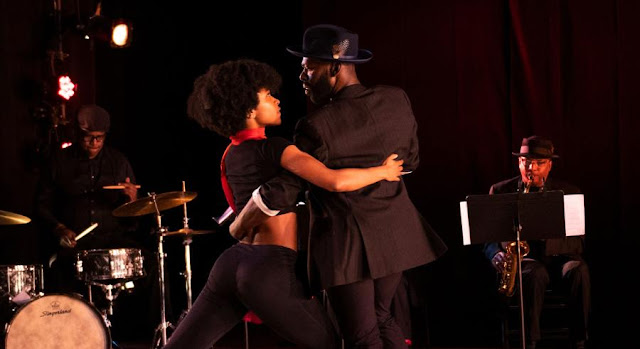
DIANNE McINTYRE Group: In the Same Tongue World Premiere

"Art is Business" https://secure.walkerart.org/12363/12392

Photo © Paula Lobo.

"In modern dance, the names of its persevering practitioners are like cherished objects. Dianne McIntyre is one such . . . one of dance's most important African-American artists."—Time Out NY.

A pioneering Black dance innovator noted for decades of collaborations with leading forces in avant-garde jazz, Dianne McIntyre returns to the Walker with the world premiere of a major new work featuring an evening-length score by celebrated composer Diedre Murray and poems by Obie-winning playwright Ntozake Shange.

Photo © Paula Lobo.

Support for the commission and the development of In the Same Tongue was provided by Walker Art Center, Northrop, Baryshnikov Arts Center, Dance Place/Alan M. Kriegsman Creative Residency, Duke University, Maggie Allesee National Center for Choreography, Princeton University, Apollo Theater, and ArtsEmerson. World premiere.

Photo © Paula Lobo.

 This elegant and captivating work employs a live jazz quartet and a vigorous company of dancers to explore the deep rivers of communication in Black American history and culture.


Event Information
Performance Location: Walker Art Center
725 Vineland Place, Minneapolis, MN 55403
Performance Begins: 8:00 pm
Accessibility: Accessibility services are available upon request.
Detailed Event Information: Walker Art Center will email detailed event information to all ticket holders the day before the performance they are attending.
If you need assistance with your tickets, please call 612-624-2345 or email umntix@umn.edu.

Curatorial Museum Practice Core Comp Site Visit 2023

"Art is Business" https://blackmuseums.org/.


Critical to the research, safeguarding, and display of museum objects and living collections, curators' roles have continued to expand in museum practice. Beyond collection work, today's curator engages the community by fostering civic, social, and cultural dialogue about ideas and creativity through public examination, interaction, research, interpretation, and exhibition of arts, sciences, and humanities collections.

Written by the members of AAM's former Curators Committee (CurCom), Curator Core Competencies is a comprehensive documentation of the domains curators work, their duties, and their applied skills to succeed in today's profession. It defines who curators are, what they do, and why they're essential.

PRELIMINARY CASE STUDIES/SITE VISITS 2023

National Museum of African American Music Nashville


National Museum of African American Music during your time in Nashville for a comprehensive look at the vast contributions that African Americans have made in American music. The exhibits feature the legacy and accomplishments of African Americans, using history and interactive technology to this new attraction in Music City.

Touring the NAAM while attending the AAAM  National Conference in 2023 Nashville, TN.

Legacy Museum and Learning Center, Anaheim, California

Dr. Patricia Adelekan
Founder/CEO at Youth On The Move USA Inc
Legacy Museum and Learning Center in Anaheim, California, United States.


A Curator's Core Competencies
Introduction
The role of the museum curator is rewarding, broad, and challenging. This compilation of Curatorial core competencies created by CurCom's Standing Committee on Ethics addresses the skills required of curators to be successful in their profession. During the creation of this document, several sources provided valuable information regarding the skills identified by respective institutions as integral to the role of curators. The AAM, CurCom's Code of Ethics, US Federal Government's position classifications, US National Park Service classifications, College Art Association's standards and guidelines, International Committee for the Training of Personnel, and International Council of
Museums served as references, helping to create the foundation for this document. Most important were the informal conversations with curatorial colleagues and conference sessions since the 2012 AAM annual meeting, which provided valuable insights into the demands on museum curators today and revealed the growing need to formally study curatorial education, experience, and training, as well as to express the competencies required to practice the craft. 

Sojourner Truth African Heritage Museum, Sacramento, CA 


Youth Engagement Opportunities in Museum Practice


AFRICAN AMERICAN CULTURAL CENTER OF LONG BEACH

The mission of the African American Cultural Center of Long Beach is to preserve, honor, and celebrate the heritage and advance the culture of the Black/African American community in Long Beach and beyond.


RESOURCE and PUBLICATIONS: Curator Core Competencies 

The 2014 survey conducted by CurCom validated much of the input taken from these discussions and revealed other interesting considerations.

For all the things this document is, there are several things that it is not. The Core Competencies is not a manual on how to be a curator. Instead, this document intends to define the curatorial profession and identify the commonalities of curatorial domains where curators of all academic disciplines work. This document is also not intended to be a generic list of competencies for all museum professionals - it is for curators, aspiring curators, those who train curators, and those who are interested in
what a curator is.

Defining a Curator
According to the most recent version of CurCom's Curatorial Code of Ethics (CurCom, 2009), Curators are "highly knowledgeable, experienced, or educated in a discipline relevant to the museum's purpose or mission. Curatorial roles and responsibilities vary widely within the museum community and within the museum itself and may also be fulfilled by staff members with other titles."

The varied and unique roles curators perform and the domains in which curators work require the Curator's Core Competencies to go beyond this statement to state more definitively what curators are and what they do. Rather than defining curators by their function or role, which shackles them to ineffective categories, the Core Competencies defines curators by what they must know and within their work domains. Curators contribute meaningfully to philosophical issues that guide their institutions. 

Like all competence, curatorial competence is rooted in a meaningful sum of knowledge, experience, and skill. To reduce it to skills or functions undermines the larger contribution for which curators are uniquely capable. This also informs how curators should be educated in order to advance the practice.

The Core Competencies goes beyond trying to resolve the tension between the academic and procedural functions, relying on the nuance of what competence is – knowledge, experience, and skill combined, to frame the understanding of curators. In addition to a statement about what CurCom defines a curator as, this document details the domains in which curators work, the types of competencies curators must have, and the applied skills and faculties required to carry out those responsibilities.


OBSERVER 2022 Person of The Year: Shonna McDaniel's

"Art is Business" Sacramento Observer, reposted  by Alpha Bruton, Article by GENOA BARROW December 23, 2022


Shonna McDaniel's spent a lot of time lying down this year. The local artist slipped from a ladder while working on a community mural project and broke her foot.

As a person who is constantly on the go and doing something, usually for other people, being unable to move pained her as much as the injury itself; the initial injury turned into others, and she also developed life-threatening blood clots from being prone for an extended period.

McDaniels doesn't know how to sit still, yet it wasn't idle time when she was forced to. The artist's hands – and mind – were constantly working. Bedridden for five months, she discovered new ways to create and, while recuperating, organized art shows and youth art activities.

McDaniels' unapologetic work in showing the beauty of Black people and their contributions and her continued commitment to seeing Black artists have a seat at the table led to her selection by The OBSERVER as its 2022 Person of the Year.

Before her injury, McDaniels could be found running the Sojourner Truth African Heritage Museum in her beloved South Sacramento. She founded the museum in 1996 and has expanded it from a one-room space to a must-see cultural destination.
Local artist and museum founder Shonna McDaniel's has made a conscious effort to paint her people, educate the community and create opportunities for others to shine. Verbal Adam, OBSERVER
"We want to have information on great African kings and queens and individuals that they don't speak of when they talk about art history, that they are too afraid to speak of when they talk about our history," McDaniel says of the space.
Solo Exhibition Yolo Arts' Gallery 625, 2023

Visitors often encountered her going seemingly 100 mph, urging them to discover all the museum offers and pointing them to other activities throughout the building. She's still going full speed, only these days, it's in a wheelchair or a motorized scooter donated by a community supporter.

The museum is located inside the Florin Square complex. McDaniels' roots in the space date back 30 years to when she worked for Barbara Nord, the first Black woman to own a payee service in Sacramento. The building was known as the Business Incubator at the time. It's now home to several Black-owned small businesses and the African Market Place, which takes place every first and third Saturday. McDaniels also organizes Second Saturday activities to include Blacks in activities that expose people to art and culture as they do in other parts of the city.


"We need that for South Sacramento," she says. 

African Market Place leader Ra West hosted an art exhibit featuring McDaniel's during Second Saturday earlier this month. West says the spotlight was long overdue, as McDaniel's usually is uplifting other people's work.


Black Like Me
Where others see a blank canvas, McDaniels sees possibilities. When she sees voids, she seeks to fill them. When others push back against her desire to see people of color depicted in public spaces, she just paints them with bolder strokes.

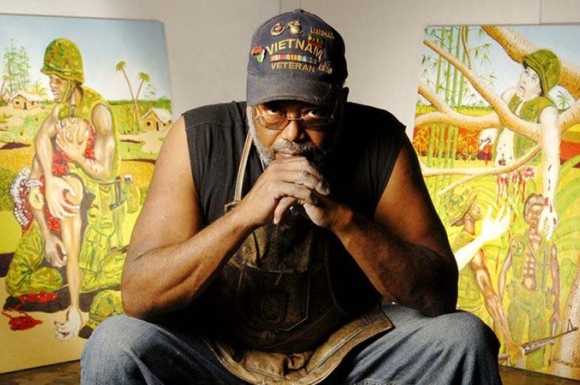
She focuses much of her artistic energy on painting Black women in all their melanated glory. Former mentor Akinsanya Kambon says that's a skill in itself.

"You can't just make Black skin by using one color," says Kambon, who first taught McDaniels at the tender age of 4.

"Black skin has all the colors in it, and I see Shonna is doing that," he says. "You have to use reds and blues and greens, and purples, and yellows; all those colors come from the sun, and the sun reflects off the melanin in the skin.


"The first thing in being an artist is you've got to learn how to see. The average person doesn't know how to see those things, but when you study them, you learn how to see and paint them. But it's not easy. So when somebody does what Shonna's doing, you can see that they put in a lot of work studying those skin tones or skin colors."

McDaniels' work has been featured in the recurring "The Black Woman Is God" exhibit at the SOMA Arts Culture Center in San Francisco. Co-curator Karen Seneferu says that as an artist, McDaniels embodies what "The Black Woman Is God" is about.
The Black Woman is God: Reclaim, Reconfigure, Re-Remember 
Curated by Karen Seneferu and Melorra Green


"Shonna McDaniels is an unsung heroine," says a fellow artist. "Like the exhibit, Shonna's art celebrates Black women as essential to building a more just society. Shonna McDaniels creates spaces that are sustainable for the community's future.

“When she produces art, she expands the intersectionality of race, age and gender, dismantling stereotypes of Black women.”

McDaniels has taught art classes and conducted numerous workshops and exhibits. She has also been involved in such collaborations as the Visual Arts Development Project, Zica Creative Arts and Literary Guild, Kuumba Collective, and the Sacramento African American Nonprofit Coalition. She also advocates for Black inclusion in public art projects such as Wide Open Walls.

"Shonna is pure light and love in action," says Sandy Holman, founder of the Davis nonprofit The Culture C.O.-O.P.

Holman met McDaniel's at the African Market Place and says her life is better for it.

"She is fearless, committed, and talented beyond measure, but I love her most for what she does for our community and her zeal to give back," Holman says.

'Woke' Walls 
"Woke" is a reasonably contemporary term, but McDaniel's says she always has been that way. She participated in her first Kwanzaa at age 5 and attended an African-centered Saturday school where she learned Swahili and was immersed in the culture.

She credits her mother, Ollie Armstrong McDaniel's, who helps run the museum, for laying the foundation early.

"We had African masks, paintings, and images of Black people throughout the house," McDaniels says. "She was a part of the Black Panther movement. We would go to Oakland to participate in the marches and other activities, so she stimulated our minds."

McDaniels' father, William McDaniels, spent time behind bars and was changed by the experience. He passed on that knowledge to his children.

"When he got into prison, he started to cultivate his Black mind, and he started sharing that information with us as young people," she says. "He started writing letters to me as a young child and sharing information about historical Black leaders. I'm getting letters with all these powerful history lessons in them."

Her mother joined the Nation of Islam and exposed her children to its ideology and self-sufficiency message. Both have influenced her art and community-focused activism.

"I definitely was inspired by the fact that the Nation had an entire block of businesses in Oak Park," McDaniels says. "It was like a Black Wall Street. I had never seen anything like it before."

Today's kids need similar exposure, she says.

"My mom involved us in everything that she could possibly imagine that would cultivate our Black minds, and a lot of the parents are not doing that. That's one of the biggest mistakes happening today for our youth. Of course, we know they're not getting that information in school."

While educators were being damned nationally for teaching the realities of American history, McDaniels was educating local youth about their place in it through a docent program at the museum that gives them money for their pockets as well. While school districts across the country added classical Black titles to their lists of banned books, McDaniels was introducing youth to Black authors on the walls of her museum and supporting the local business, Escape Velocity's Boys in The Hood Book Club, a literacy program.

For McDaniels, who hosts a Black memorabilia fest and the annual Festival of Black Women's Hair, Body, Mental/Financial Health, Beauty, and Art, it nearly broke her heart to hear a local teen say she "didn't know anything about being Black until the George Floyd incident." Also troubling, she says, are upper-middle-class parents and celebrities with far-reaching platforms, who shy away from their Blackness and denounce the importance of young people knowing about their culture and their past.

"What our community does not understand is that our children are out here acting foolish and running amok, and it is because they don't have a knowledge of self," she says. "If they had a knowledge of self and loved self, that would allow them to love others in their space. If they knew that they come from greatness, they wouldn't be out here calling each other the n-word and the b-word; they would be on a whole other level of consciousness."


'This Work Is A Part Of My Soul'
During the pandemic, McDaniels and the Sojourner Truth Museum have minded the gaps for the community, hosting senior activities, providing weekly meals, and hosting youth pop-up events and art lessons, complete with supplies. Some events were covered by city COVID-19 money, but McDaniels continued the activities even after the funds stopped this year.

"This work is a part of my soul," McDaniels says. "It's my life's work, and I want parents to get it. I want our children to get it; I want them to succeed. I want them to love each other. It doesn't matter if the funding is not there. Like Malcolm said, 'By any means necessary.' So, if I have to come out of my own pocket, which I still do in the past and sometimes today. I've always had that mindset. I'll go without to make sure that my community has."


"I've seen her develop as one of the most accomplished artists in Sacramento, in terms of African Americans," he says.

Born Mark Teemer, Akinsanya Kambon is an American artist and art professor.

Kambon is also happy she has stayed true to her activist roots.

"We as artists have a responsibility to speak to our people's struggle in this country because that's why our ancestors gave us this talent. They gave it to us so we can carry on the fight. We have to intensify the struggle," Kambon says.

Supporters often caution McDaniels that she's "doing too much," but those words aren't in her vocabulary. She's already focused on 2023 and getting an early start on securing funding for her annual Banana Festival, a significant museum fundraiser.

"A lot of people tell me, 'You're going to kill yourself trying to save your people,' 'You're going to make yourself sick,' or 'You have made yourself sick,'" she says. "It's just embedded in me to continue to do this work, and hopefully, before I transition, some major change will be made."

THE OBSERVER proudly salutes Shonna McDaniel's as its 2022 Person of the Year.

Phantom Gallery CHI

Gallery Guichard and Donate Life Illinois proudly present "Soul of the Stone"

"Art is Business": Dive into an artsy vibe and explore the hidden stories and energy of stones at this unique event. Gallery Guic...